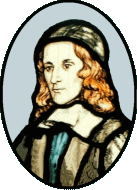
George Herbert usually wrote short poems. Very few need more than a page to convey his message. Indeed, in the whole of 'The Temple' there are only four poems of more than 100 lines: 'The Church Porch', 'The Church Militant', 'Providence' and this poem. It is too long to quote in full here, but though the abridged text below has only 11 of its 63 verses it preserves much of the flavour of the  complete poem.
It’s not only its length that makes this poem unusual in Herbert’s output. It is the only poem that introduces Jesus Christ in the first person. He relates the story of his own suffering, abandonment and isolation in the only story in The Temple that has a pre-determined and familiar ending – indeed it ends with Christ pronouncing his own death. And though there are references within the poem to Christ’s love for mankind, in general 'The Sacrifice' appears to be an exercise in condemnation, blame and incredulity, peppered with quotes from the Bible that highlight the bitterness that Herbert attributes to Christ. Dylan Thomas would have approved: the Christ of this poem does not go gently into his good night.
But who is Christ addressing? Manifestly, in verse 54, it is his father. But elsewhere? Mankind in general ('all ye who pass by')? His followers (such as Judas in verse 11)? Or Herbert himself? The intensity of the language, its solemn tread across the page, its relentless refrain, speak of the close identification of poet and subject. The sufferings of Christ and those of Herbert coalesce into an indivisible whole.
Little is known about when Herbert wrote the bulk of his poems; but 'The Sacrifice' appears to be an early one. It is found in the earliest surviving collection of his poems (the Williams manuscript), probably compiled some two or three years before Herbert moved to Bemerton; and though Herbert revised many other poems from that collection quite extensively before his death, 'The Sacrifice' remained virtually unchanged except for its division into separate verses. It had already achieved what Herbert wanted, and he placed it in a commanding position within The Temple, his final ordering of the poems he wished to preserve. The Temple begins, not with the birth of Christ, explored later in a poem titled 'Christmas', but with a series of poems that describe Christ's death and dramatise not only his crucifixion but the difficulties faced in responding properly to it.
Back to Our Archives